27.6.11

Quick squid: chipiron plancha


I´ve read many times the rule about squid: cook it fast for a minute, or slow for an hour, unless you want to eat rubber rings.
I usually go for the slow, since it seems easier to control; you let the thing simmer and can try and see if it´s ok. The flash method seemed a bit scary.

However, once you try it you see it really is the easiest thing, and so good. We had a couple of small squid and a bunch of samphire, a salty, crunchy seaweed, with very cold beer before dinner and it was just the thing.

Ingredients

Squid, as much as you like but at least one per person
salt, pepper, parsley, lemon juice, olive oil

Marinade the cleaned squid with the salt, pepper, parsley, juice and oil.

Heat a non-stick pan as high as you can and when it´s hot throw the squid on it. It will curl and contract quickly. The second it´s opaque, take it out. It´s almost impossible to undercook.
Your kitchen probably won´t have the power to turn it crunchy golden like the planchas of tapas bars, but it´s still going to be very good. If you´re doing a lot then do it in batches, so you can control the thing.

23.6.11

I just want to say


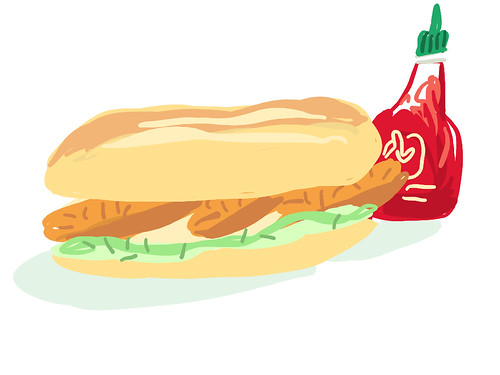
Fish Finger Sandwich, originally uploaded by Lobstersquad.

the Fish Finger Sandwich. Awsome.

21.6.11

Boiling octopus

I´ve written about pulpo a feira before, and octopus salad. Always, I began with the instruction "buy some boiled octopus".
But then I moved to the northernmost reaches of civilization, to a place where octopii are rare, and when found, small and raw. If you´re lucky, they will be clean. If you´re not, you´re in for an interesting ten minutes gouging yucky stuff from the insides of the head. You´ll never believe how much stuff can fit in there.

So anyway, here are instructions for boiling an octopus. Once it´s done, you only have to proceed to the other recipes.

It´s very easy, as long as you follow two rules:


I have only done this with the small octopii (?) I find here in the North Sea, but in Spain you´d bring home a great whaking beast, so it´s best to make this for a party.


First, freeze the octopus. Ask the fishmonger if it has been frozen before, and if it has then you´re free to go. Freezing breaks up the whatever technical term it is so that it is tender.


Put it in the fridge to defrost overnight (or, you know, waive all health and safety advice and leave it on the counter for a shorter while. it´s what I do)


Bring a big pan of water to the boil (no need to salt). Add a bay leaf and a a few peppercorns.

When it´s boiling, drive a hook through the octopus´s head and plunge it into the boiling water. Count to three, and take it out.

Wait for the water to come back to the boil and repeat the process three times.


This ensures that the skin won´t break up and it will look prettier.


Put it back in the water, cover and leave to simmer for about 90 minutes, by which time it should be tender.


Or, if you are using a pressure cooker, leave for 30 minutes and let the pressure come down on its own.

12.6.11

Fusion baby food: miso mashed potatoes

Miso is one of the things that´s always sitting in my fridge. Usually to be used as a soup base when I´m making Japanese-y noodle soups, and as a quick marinade for fish, but also to kick up a panful of mushrooms, or anything that tastes a bit wan.

Yesterday I had a leftover boiled potato, and a toddler in a high chair looking hungry but discerning. The lone potato would not cut it, but if I started fiddling around defrosting stuff, he´d howl. Answer; miso mashed potatoes, a David Chang conceit, but fine for all ages.

I heated the potato in the microwave, and then put a bit of butter and a bit of miso, mashed it with a fork, and that was that, a very popular instant hit.

You can also do that with sweet potatoes, and if it´s for you, don´t be shy with the miso. Your pork chop or chicken thighs will be very happy next to this.

10.6.11

The Food of Spain, by Claudia Roden

It´s finally out. I can´t wait to get my hands on it, and much fruitless time is spent debating wether to buy the US edition already, and risk the American measurements, or wait like a good girl for it to come out here.
Meanwhile, you can read a review here, a New Yorker profile of the author here, and, best of all, an excerpt here.
I can´t say for sure, but I think this is it, the definitive book on Spanish cooking, yes!

4.6.11

Pressure cooked white rice


Brown rice is usually the star of the pressure cooker, because it takes forever to cook in a normal pot. White rice cooks fairly quickly, but sometimes even ten minutes shaved off cooking time makes a difference, and it´s a good trick to have up your sleeve.


My pressure cooking guru, Lorna Sass, says you can cook long grain rice in a pressure cooker., but it will be stickier than it would be in a normal pan. Lorna insists that she´s used to it now and would not have it otherwise.

I tried it and it was ok, but definitely on the gummy side. Perfect for fried rice the day after, but nothing great.


However, I tried it again yesterday, because I was in a hurry and wanted to test a theory. Lorna will have you put 1 cup of rice and 1 and 3/4 of water in the cooker.

I did it with just 1 of rice to 1 of water and you know what? It was awesome. Yes, a little stickier than usual but definitely not gummy, definitely delicious and very quick. So here it is:


Long grain rice in the pressure cooker


Put a bit of oil into the cooker and while it heats measure out two cups of rice and wash and rinse them.

Now turn them in the oil a little until they begin to look a bit transparent (or not. this is optional)

Add salt and two cups of water.

Cover, lock, bring up to pressure and count three minutes. Turn the heat off and let the pressure come down for seven minutes.


Open, fluff the rice with a fork and there you go. For decadence, add a bit of butter.


Also, this method is perfect for pilafs, so stay tuned for my cheat´s pilaf, a thing of beauty and speed.

26.5.11

To make the kitchen smell good


Back again, never mind the Icelandic volcano that nearly grounded us.


I came back to a house inhabited only by J for ten days. There was a weird smell, which sometimes happen when you leave a guy alone. It didn´t come from stacked takeout boxes, however (the house was eerily tidy, actually). After some sniffing around I located a glass I´d left on the counter with a bunch of fresh cut parsley. Two weeks later, it was a stagnant pond with lots of fuzzy slimy stuff.


This was quite lucky, as last time it took me a couple of days to locate the offending substance; chorizo wrapped up and left to molder in a cupboard.


I quickly threw that out, but to make sure all lingering nastiness went away, I did the Yolanda-Frying-Fish-Night-Trick. It makes your kitchen smell lovely, and seems to subdue any competing nastiness, so it´s a good one when you´re cooking pungent stuff.


Simply, boil some water with a bit of sugar, some lemon, and a stick of cinammon.


Let it bubble away on a back burner unattended, but do keep an eye on it. Once it´s boiled down you can even use it to drizzle on fruit salad if you like.


Oh and by the way, a recipe for arroz caldoso, by way of Hip Pressure Cooking, where Laura asked me to do a guest post. Thank you!

20.5.11

Tamasin Day Lewis in Madrid


Untitled #94, originally uploaded by Lobstersquad.

this is a sketch I made during the press event held before the masterclasses at Alambique cookery school last Monday.
It was a lot of fun, the food was amazing.
more Madrid food tales soon, if I can stop eating and drinking long enough to post about it.

7.5.11

Ballymaloe brown yeast bread

Clearly nobody needs to make bread at home, and anyone who does does so because they like it, not because they find it easy or convenient. So saying a recipe for bread is easy and convenient isn´t saying all that much.

However, this bread is a good way of either getting into the bread habit, or of slipping back into it. It´s the easiest bread I´ve ever made, no question. It makes the famous NYT no-knead bread fussy by comparison.

It makes an honest to goodness wholemeal loaf, crunchy outside, springy inside, a bit chewy, with lots of flavour.

When you read the recipe you´ll think, like I did, "no way". Wishful thinking, you´ll say. It can´t be true. Mix flour and water and molasses and yeast in a bowl with a spoon, pour the battery dough just like that into a greased tin, leave it to rise there just once and bake straight away?

I fully expected to get a well-meaning but inedible brick, and if it had been a recipe from anyone but Ballymaloe´s Darina Allen, I wouldn´t have even bothered.

So try it. I think we´ll be having home made bread every day again. It´s the easiest thing in the world to mix three batches, bake them, all in an afternoon, freeze two loaves and have enough for the whole week.


The full recipe, together with a few more, is in this Guardian article. They come from the book "Forgotten skills of cooking" which is a great book, although not the most practical, because, frankly, keeping chickens and growing cabbages ain´t in my line. I´ve borrowed it from the library, but I´m copying down a lot of recipes, so it´d definitely recommended.


However, just so you know, here are a few notes. The dough took one hour, not 20 minutes to rise. The rest is just as Darina Allen writes.

If you´re in Spain and can´t find strong brown flour for a reasonable price, buy gluten and add a heaping spoonful to your flour.

If you´re using powdered yeast, mix all the dry ingredients and then the treacle and water.

2.5.11

Cacharros


Cacharros, originally uploaded by Lobstersquad.

winding down, waiting for Pia to fall asleep, browsing Darina Allen's latest book and debating wether to make Eve's pudding or Irish apple cake tomorroe.

Share